

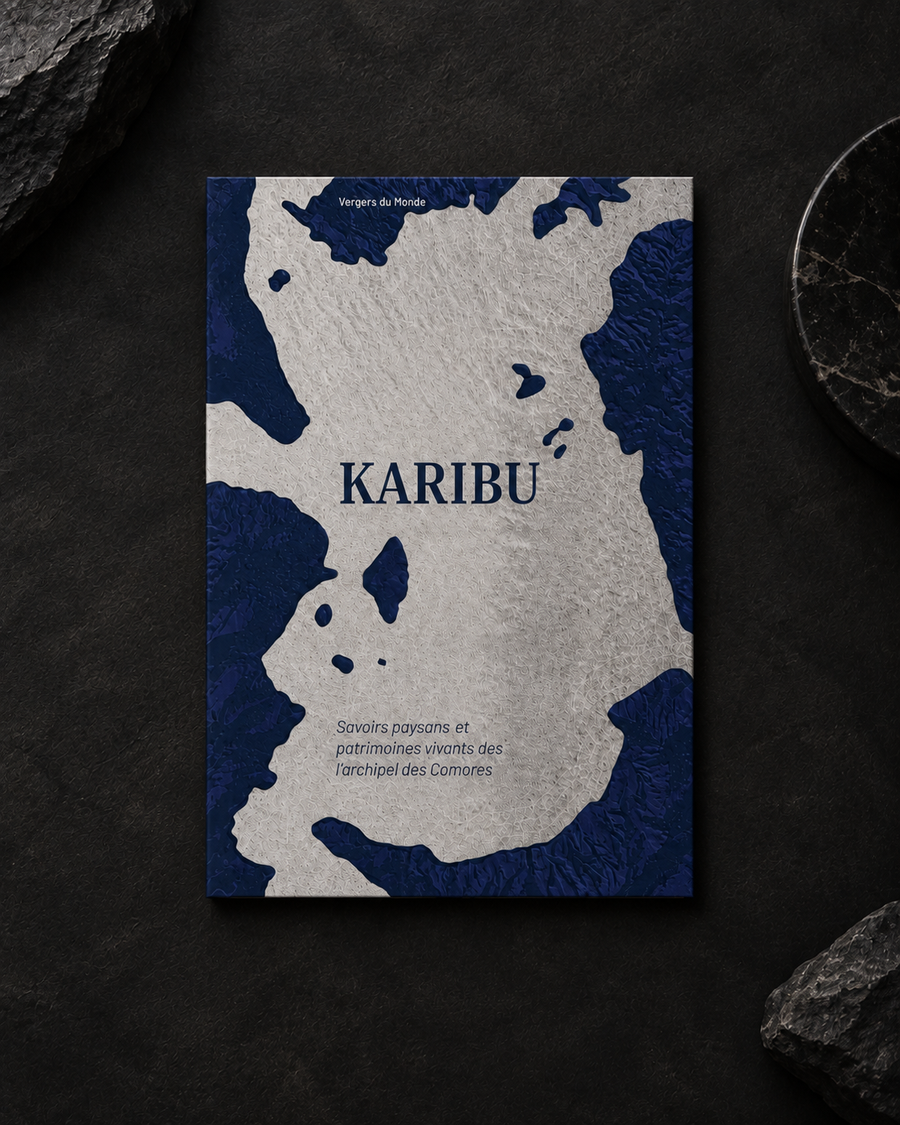
KARIBU
Farmers' knowledge and living heritage of the Comoros
In Shikomori, karibu means “welcome”. This book opens the door to an archipelago: its coral stone, its fields beneath the trees, its scents, its celebrations and the voices that carry it.
The Islands of the Moon
At the edge of the Indian Ocean lies an archipelago where the Moon seems almost to touch the sea. An old legend tells of a prophet who, guided by his birds, once landed there by dhow. Dazzled, he cried out:
“These islands, ah, these islands! They are so beautiful, they look like the moon!”
Over time, Djazaïr-el-Kamar became Kamar, then Comoros.
Four islands, four voices
The Comoros islands are like sisters: one language, one faith, a deep bond with the sea. And as in any family, each has its own character.
Ngazidja
the island of fire1 148 km² · Karthala 2 361 mLava, plateaus and steep coasts. A matrilineal society living alongside Islam.
Ndzuwani
slopes and old cities424 km² · Ntingui 1 595 mFields farmed up the steepest slopes, and the old towns of Mutsamudu and Domoni.
Mwali
forest and highlands211 km²The quietest one. Plateaus, fertile valleys, forests: daily life can be read in the landscape.
Maore
the lagoon island374 km²The oldest, ringed by reefs. Vanilla, ylang-ylang, coconut, cassava.
The memory of stone
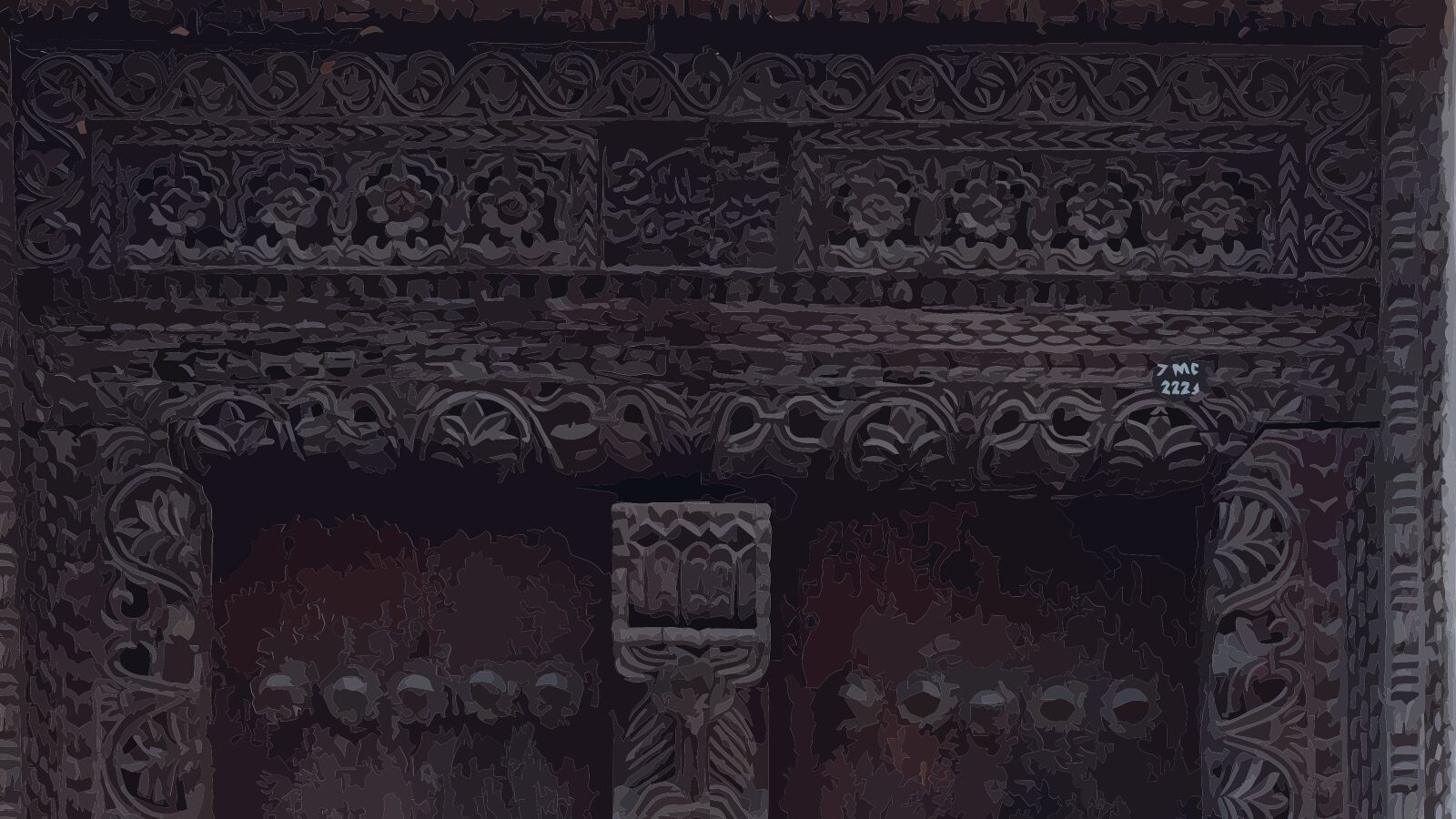
In the medinas of Mutsamudu, Domoni and Moroni, houses are built of coral and lime. Palace walls are carved with fine niches, and wooden doors tell a family's rank. The book walks through these stone towns, from the age of the sultanates to a society where the house belongs to the mothers.


“In the Comoros, the tree does not come after the crop: it is already in the field.”
What the land teaches
Living hedges, gardens around the houses, banana and taro under the canopy: here, farming works with the tree, not against it. The book gathers this farmers' knowledge, and the stories of the plants that made the archipelago famous.
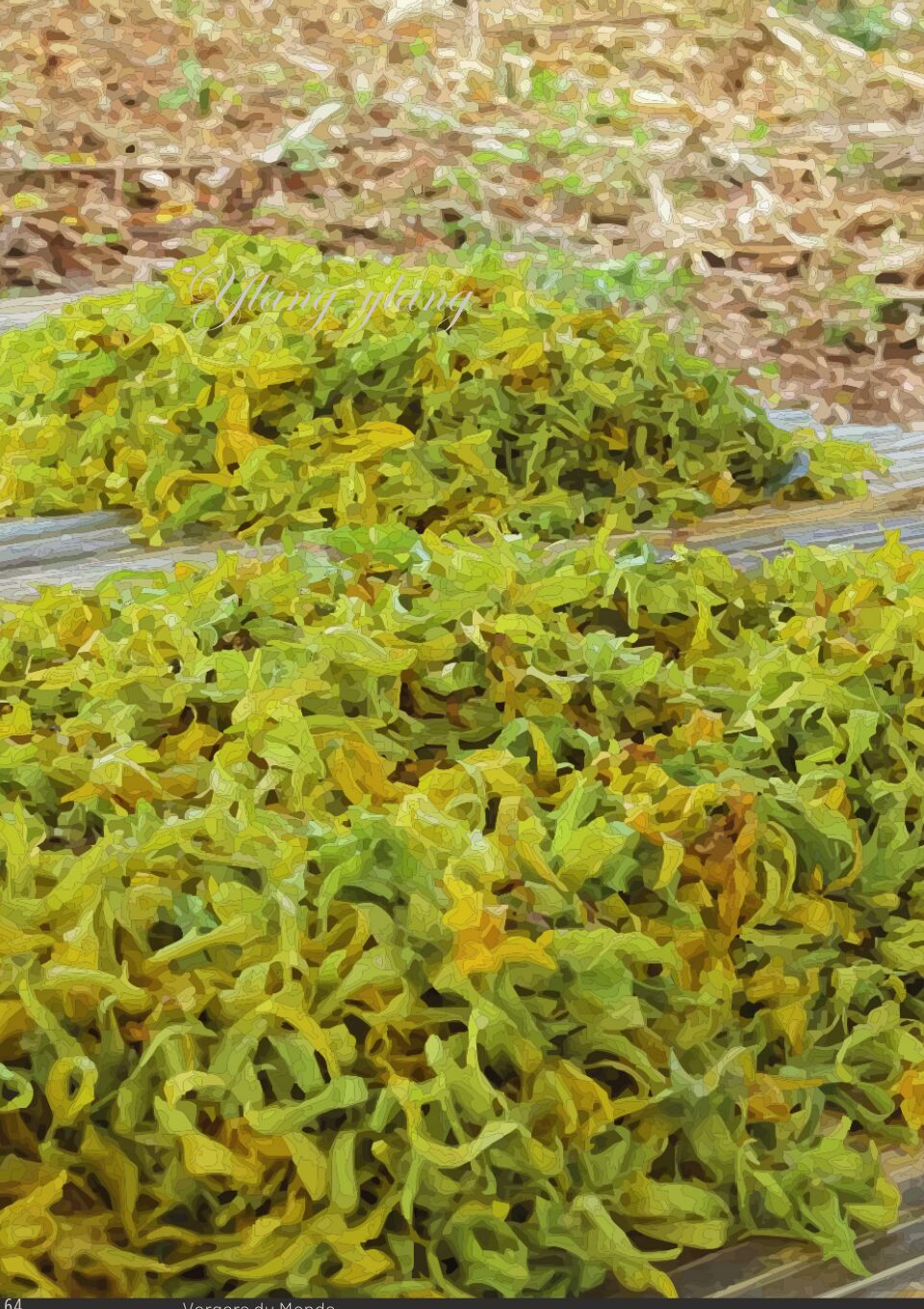
Ylang-ylang
Ripe flowers are picked by hand at dawn, when their scent is strongest, then taken straight to the still.
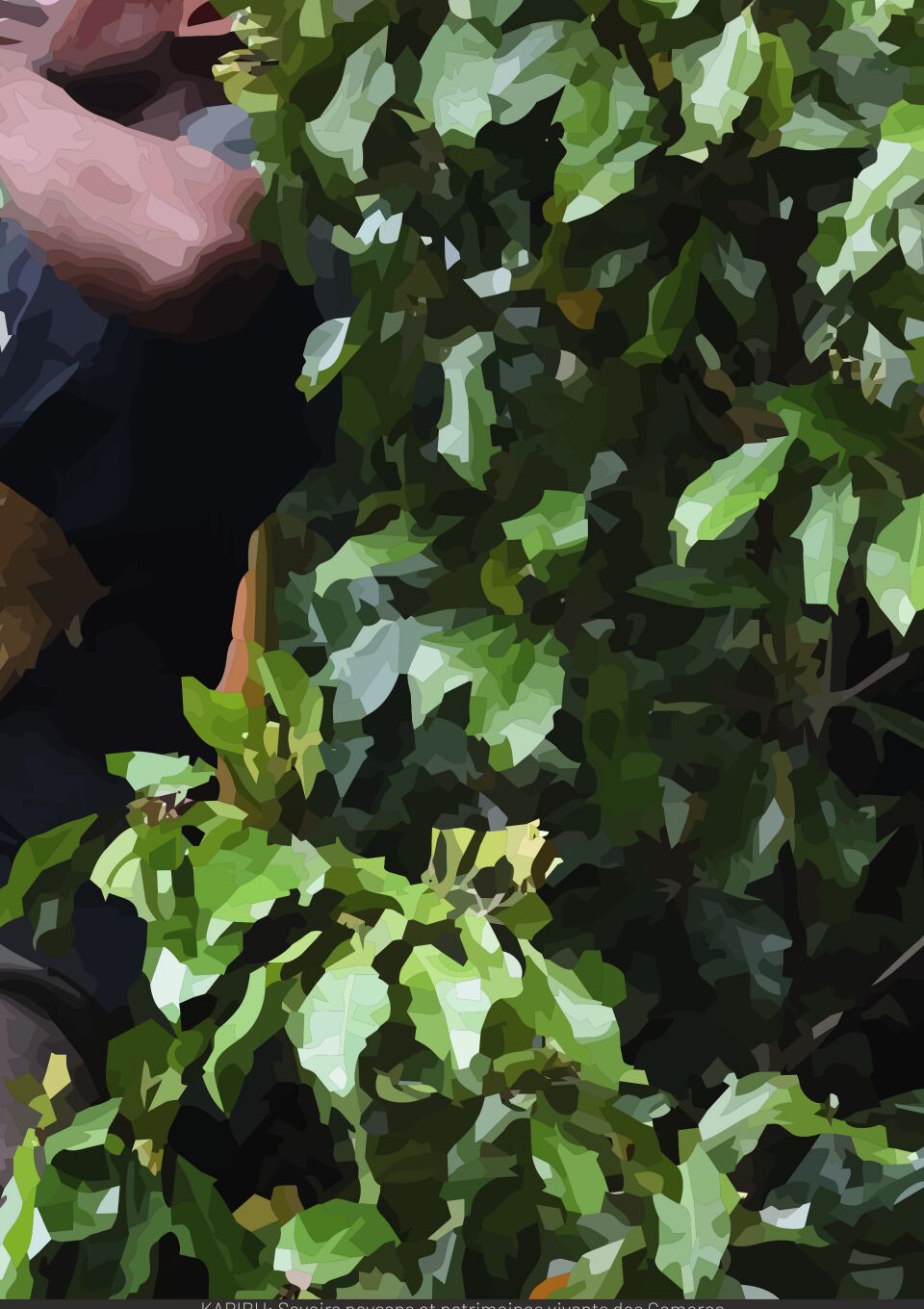
Clove
Picking, drying, storing. At the height of the season in Ndzuwani, cloves dry even on the pavements.
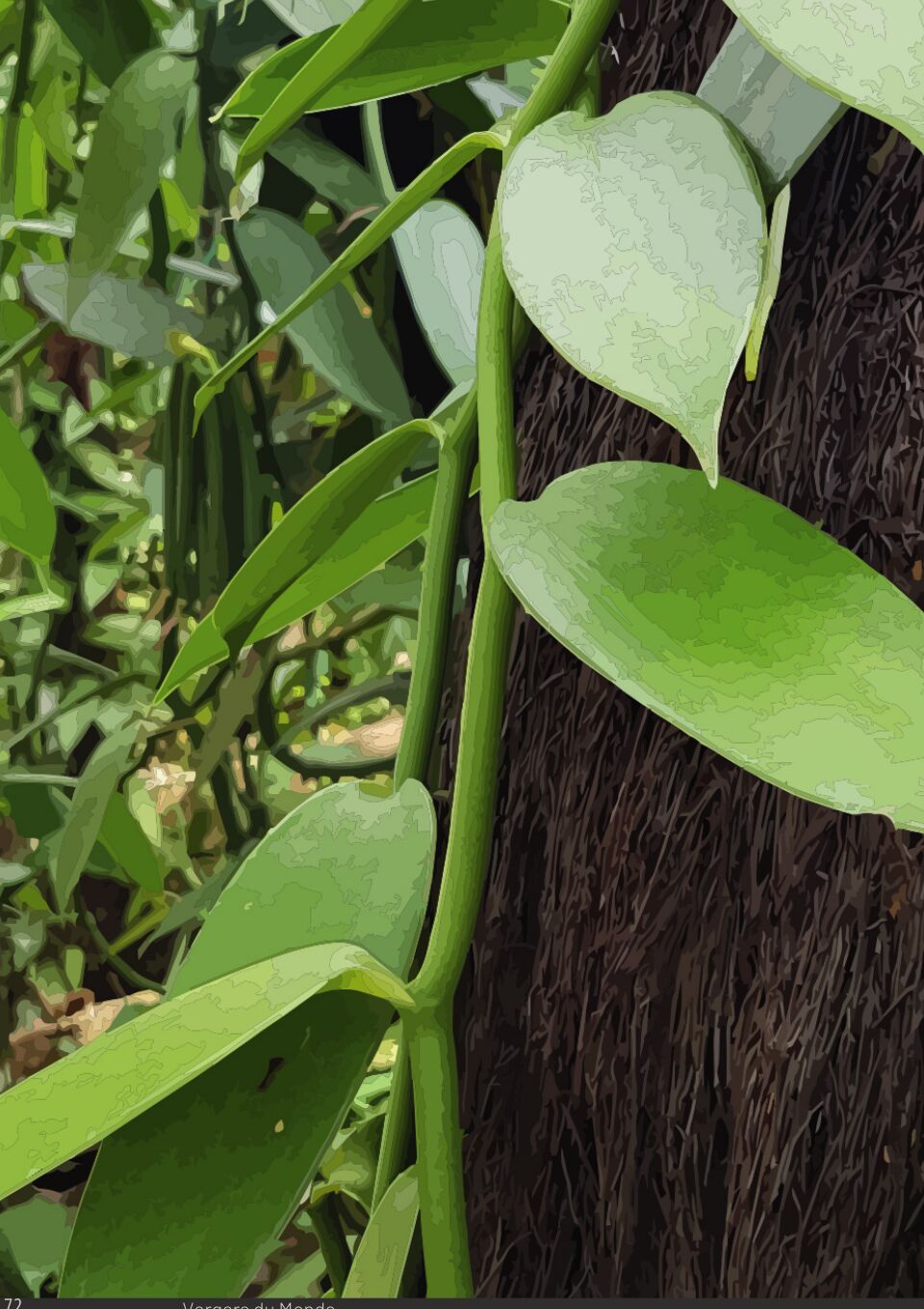
Vanilla
A craft of patience. Each morning, the “vanilla matchmakers” pollinate the flowers one by one.
Djahazi, song of the seas
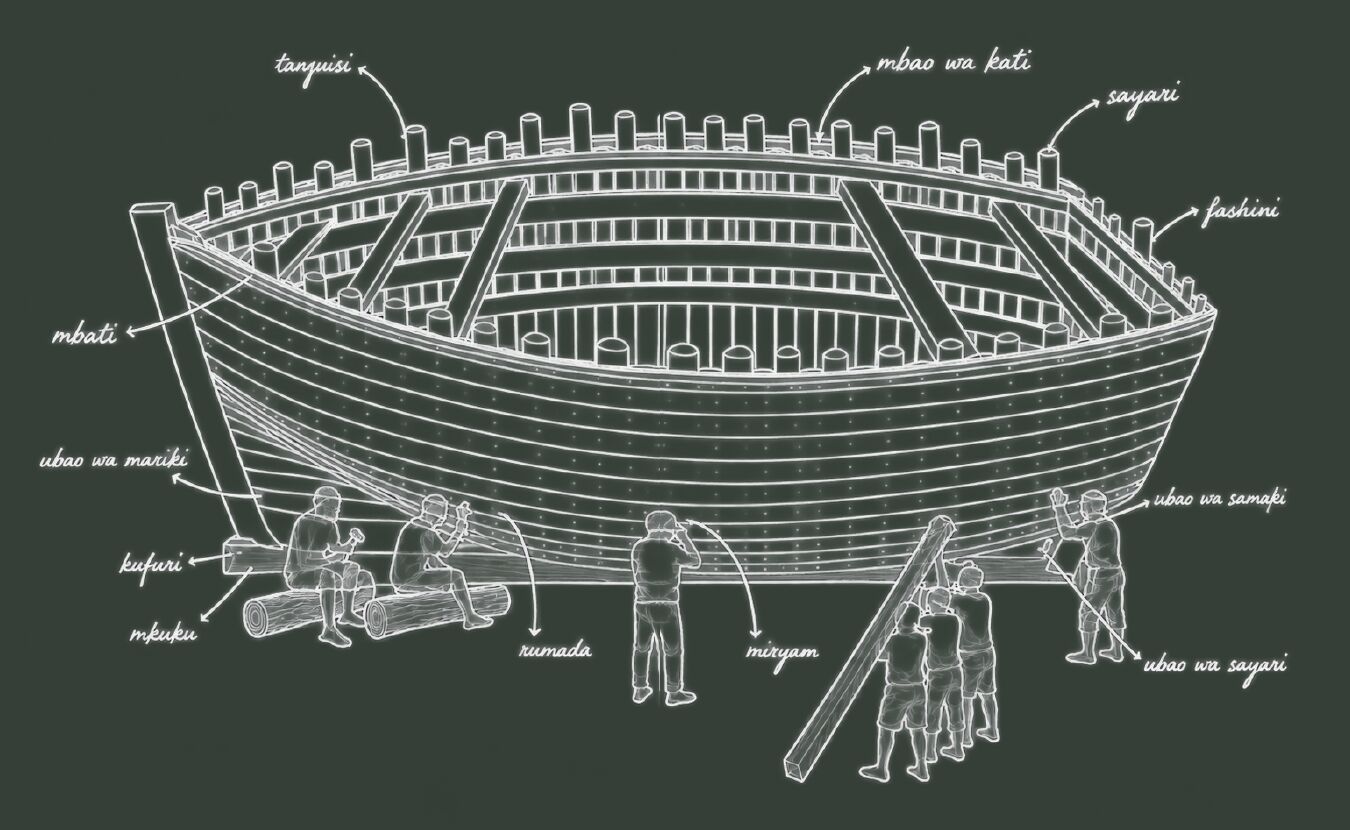
The djahazi is the old boat that linked the islands. A whole body of knowledge is passed down around it: that of the nahoda (captains), the crews and the shipwrights who shape the hull with an adze and caulk it with cotton.
The book details every part of the boat, with its name in Comorian.
Sun on the skin
Msindzano is a sandalwood mask, rubbed on a coral stone into a pale paste. Care, protection, adornment: a way to wear the tree on one's face. Then come the celebrations, the grand wedding, the songs, the shared meals: everything that holds a community together.
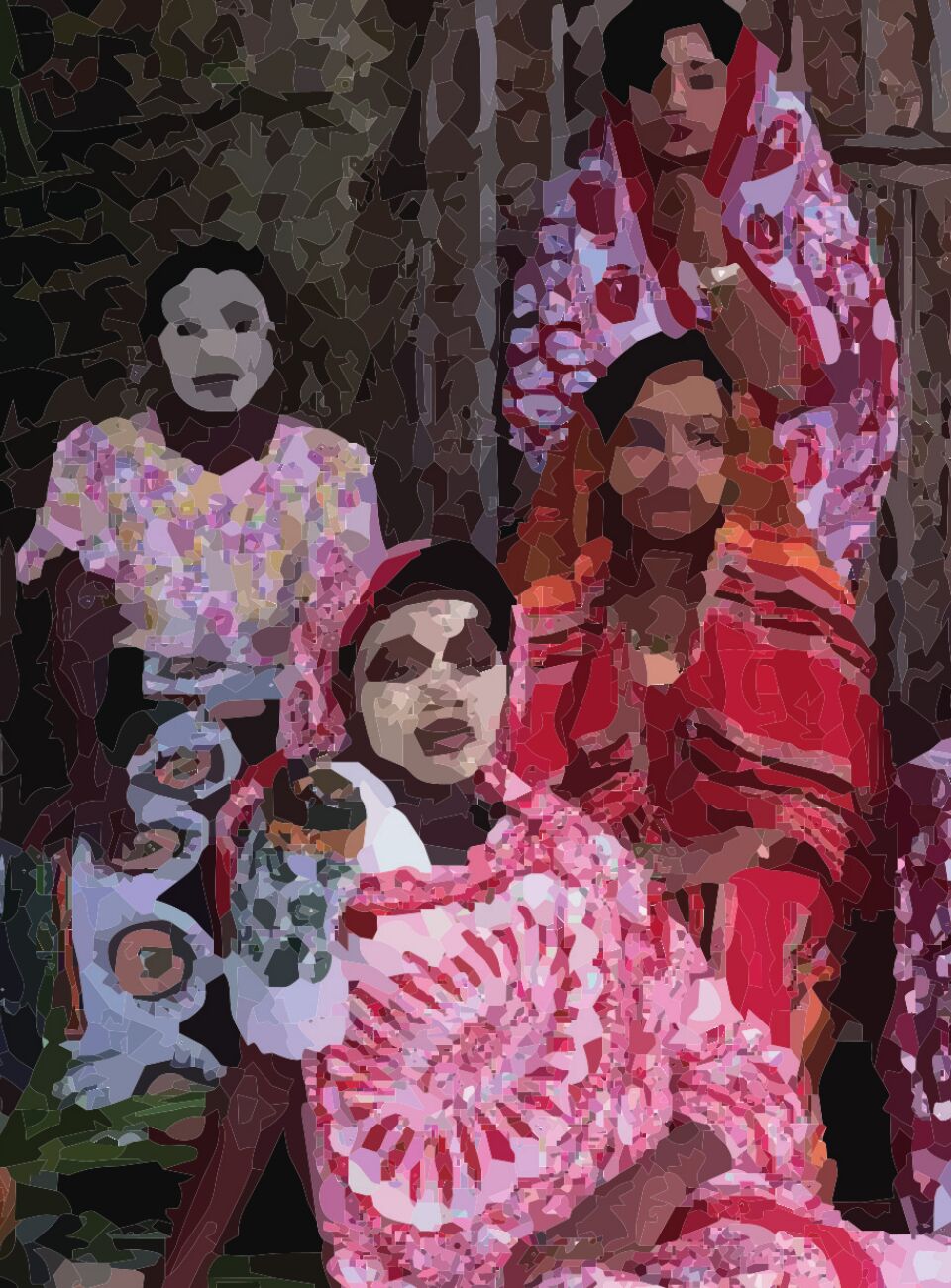
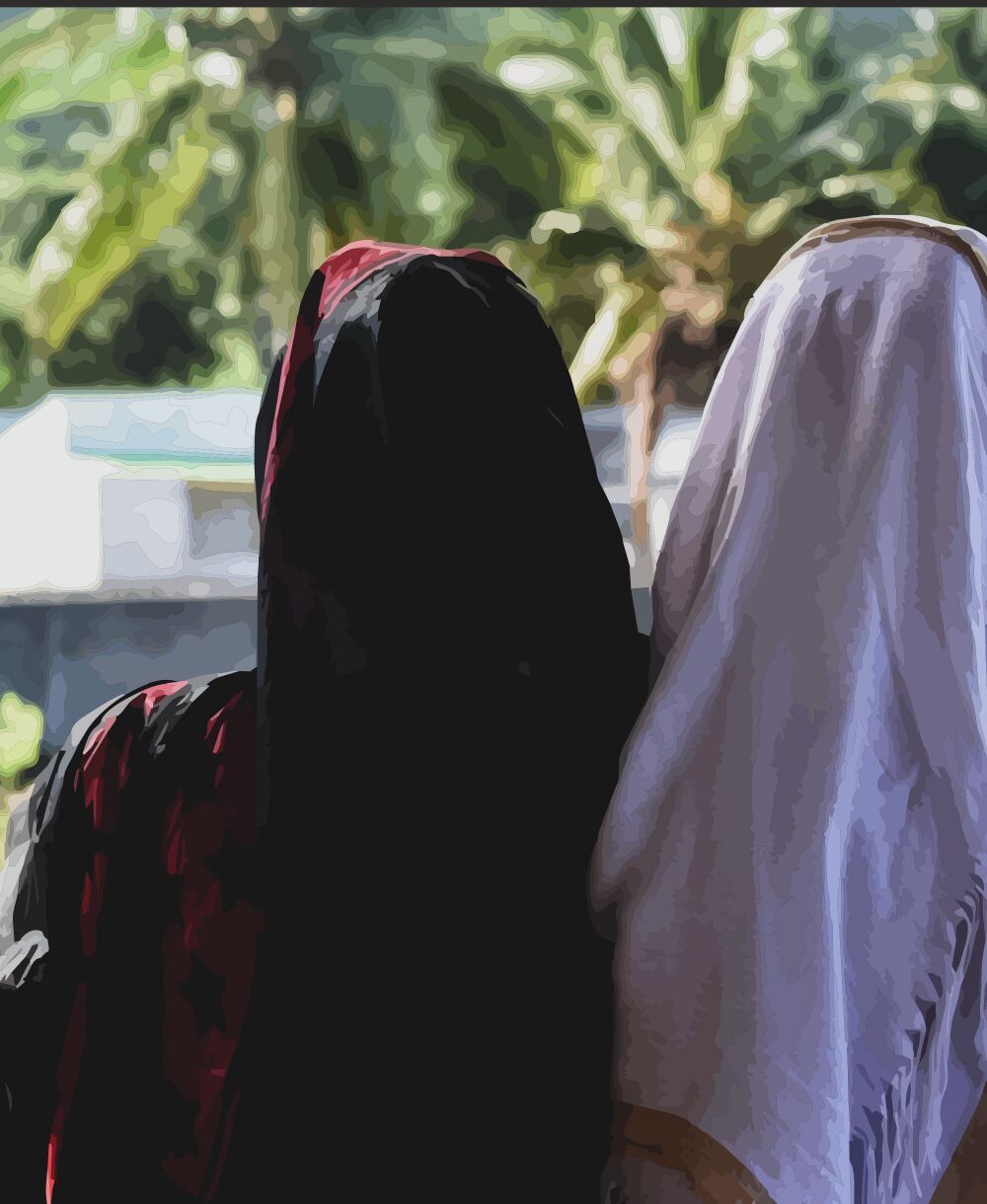
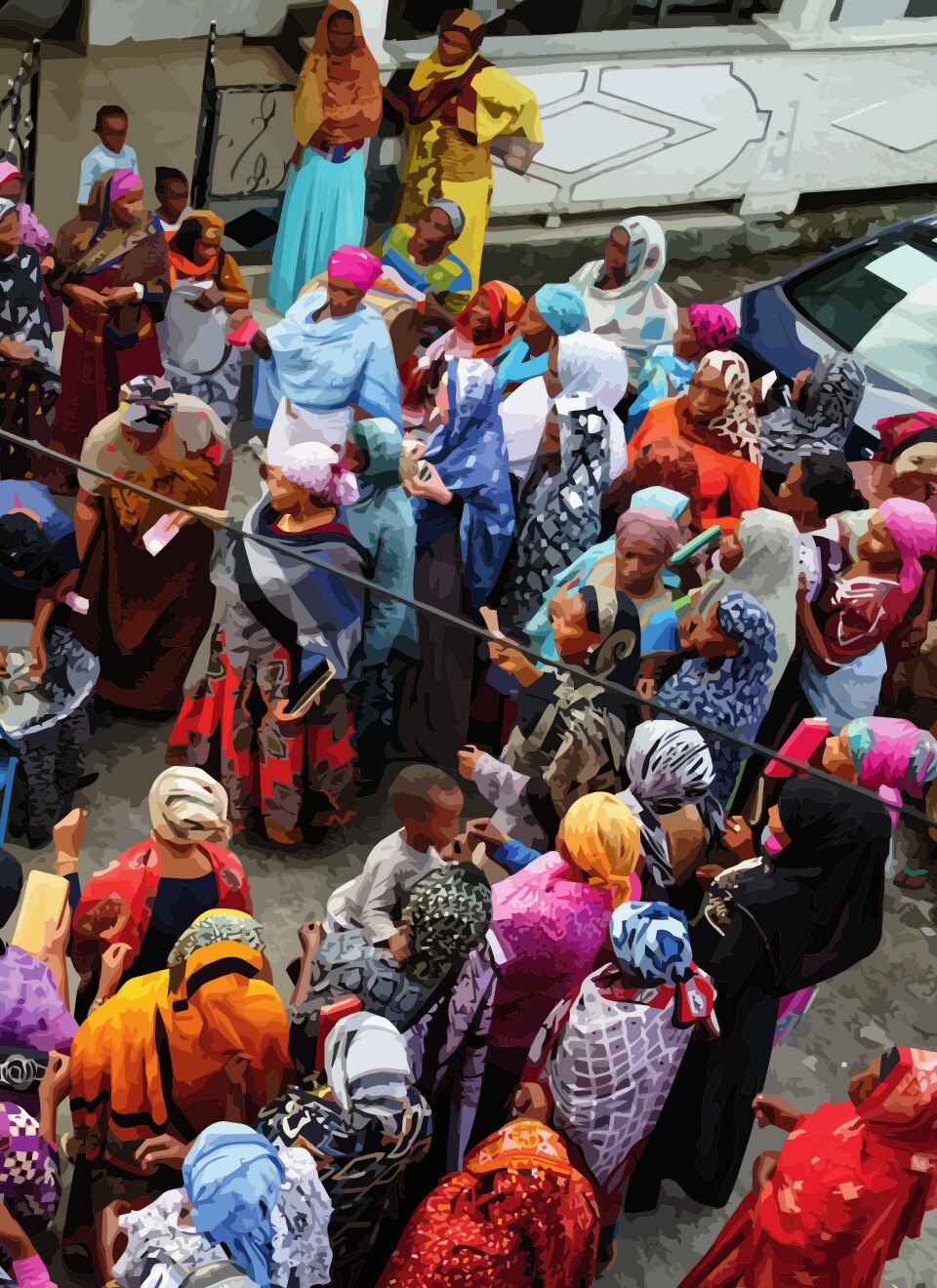
Photographs by Sofia Mmadi.
A journey in six gestures
Karibu reads like a journey through the archipelago, one chapter at a time.
Observe
The Islands of the Moon and tales of the crater.
Listen
The language, the four islands, their voices.
Touch
Stone, coral, sultanates, plantations, scents.
Feel
The tree, the djahazi, basketry, healing plants.
Savour
The grand wedding, rhythms, hospitality.
Pass on
What is shared, what is kept.
Images and forms
Sofia Mmadi
Most of the photographs in the book are hers. She shows the Comoros differently: the spontaneity of celebrations, the silence before solemn moments, the fields at sunrise while the dew is still on the leaves.
Ava Xia
London-based environmental researcher and designer, founder of LORE. Her practice draws on Indigenous knowledge and vernacular traditions, exploring cultural memory and the ties between humans and more-than-humans.
Step into the archipelago
A beautiful book to read, to give, to keep close. For those who love the Comoros, or want to discover them.
- Pages146 pages
- Format7 × 10 in, full colour
- LanguageFrench
- PublisherVergers du Monde Press